The Eastern Economic
Corridor (EEC)
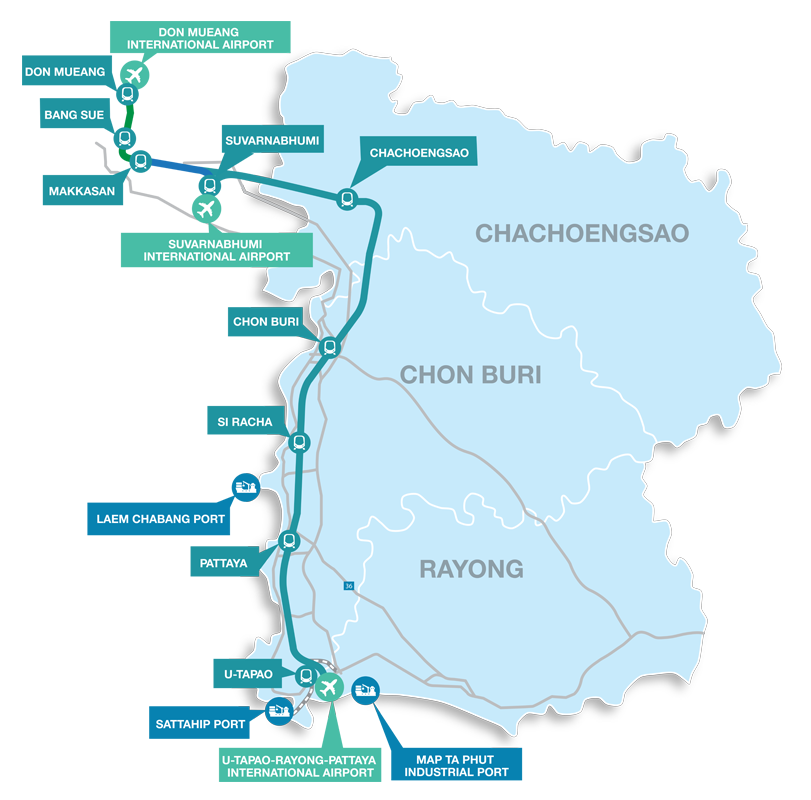
is an area-based development initiative, aiming to further improve the Eastern Seaboard. The EEC project initially focused on the 3 Eastern provinces, namely Rayong, Chon Buri, and Chachoengsao.
The EEC development plan envisions a significant transformation of both physical
and social development and serves as an important regulatory sandbox, enhancing
the country’s competitiveness under the Thailand 4.0 scheme. It aims to transform Thailand into an innovative, value-based economy, with an emphasis on 12 key industries. Guided by the Constitution of the Kingdom of Thailand, which mandates
a “20-year National Strategy” as a long-term framework for national development, the plan seeks to improve quality of life across all sectors and elevate Thailand to achieve high-income status. The EEC will function as a modern industrial base and a strategic gateway to Southeast Asia and the broader Asia–Pacific region.
is an area-based development initiative, aiming to further improve the Eastern Seaboard. The EEC project initially focused on the 3 Eastern provinces, namely Rayong, Chon Buri, and Chachoengsao. The EEC development plan envisions a significant transformation of both physical and social development and serves as an important regulatory sandbox, enhancing the country’s competitiveness under the Thailand 4.0 scheme. It aims to transform Thailand into an innovative, value-based economy, with an emphasis on 12 key industries. Guided by the Constitution of the Kingdom of Thailand, which mandates a “20-year National Strategy” as a long-term framework for national development, the plan seeks to improve quality of life across all sectors and elevate Thailand to achieve high-income status. The EEC will function as a modern industrial base and a strategic gateway to Southeast Asia and the broader Asia–Pacific region.
LEGEND
- HSR Linking Three Airports
- Eastern Railway Line
- Road
- HSR Station
- Airport
- Port
EEC Development Plan
The EEC Development Plan is integrated into the 20-year National Strategy
and comprises of six key action plans for
Development of
fundamental infrastructure
Development of
digital infrastructure
Development of
smart cities and
financial centers
Development of
targeted industries that utilize advanced technology
Development of
promotion of tourism
Development of
human resources, education,
research, and technology